Hydraulic Tilting Sigma Mixer
A Good Batch Still Needs a Clean Way Out
Mixing performance alone does not decide whether a sigma mixer fits the workshop. If the batch is difficult to lift, scrape or transfer after kneading, an unsuitable outlet can slow the next process down. Hydraulic tilting gives the chamber a direct discharge path when that route suits the material and the way the finished batch will be handled.
Watch the Batch as It Leaves
Tilting creates an open discharge direction, helping the operator see the material condition and manage how it moves into the next container or process.
Match the Outlet to the Real Workflow
HengMing compares tilting with screw, ball-valve or other discharge directions according to the material and downstream handling, not by default.
Keep Cleaning and Access in View
Where the process needs open access to the chamber, the tilting direction can support a more practical cleaning and inspection routine.
Built to Show the Discharge Decision Clearly
These project images show the open chamber, hydraulic support structure and equipment layout a buyer should be able to review before deciding how a finished batch will leave the mixer.
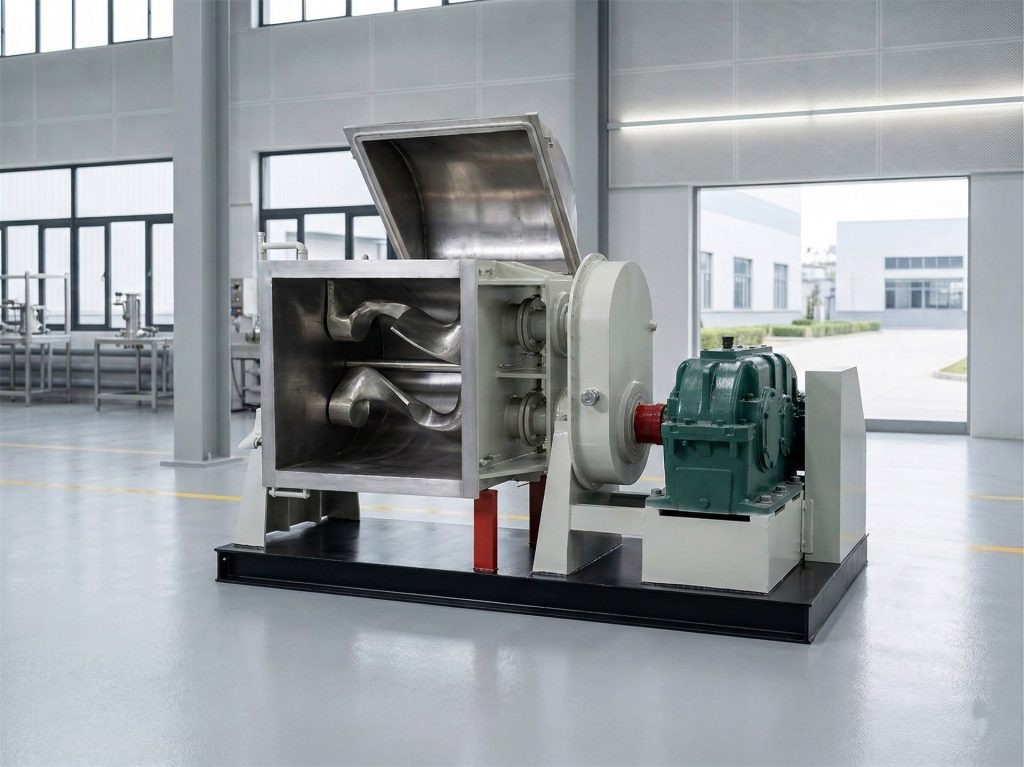 Open Chamber and Tilting DirectionThe chamber is shown in a tilted position so the blades and discharge path can be reviewed directly.
 Front Equipment ViewA real project view showing the chamber, support structure, drive and electrical cabinet together.
 Batch Ready for DischargeA project image showing material in the open chamber before the transfer step begins.
 Material After Tilting DischargeA real discharge-stage image showing the batch transferred out of the open chamber.
These are HengMing project references. The final tilting angle, discharge direction, thermal arrangement and related functions are confirmed around the ordered mixer configuration.
Configuration Parameters
| Configuration |
NH sigma mixer with hydraulic tilting discharge |
| Discharge Purpose |
Selected for a direct, open transfer route from the mixing chamber |
| Batch Volume |
Selected around the required batch size and production target |
| Heating / Cooling |
Can be configured according to material temperature requirements |
| Contact Parts |
SUS304 standard; SS316L available on request |
| Electrical Standard |
Confirmed for local voltage and electrical requirements |
All specifications are for reference only. Final configuration is confirmed according to material behavior, process requirements and local electrical standards.
Reliable Hardware for a Practical Discharge Route
The tilting direction depends on more than a hydraulic cylinder. HengMing keeps the drive, reducer and electrical component direction visible before production, while buyer-specified alternatives can be discussed for the project.
 NSKStandard bearing selection
 WEGStandard motor selection
 GUOMAOStandard reducer selection
 SCHNEIDER
&
CHINTStandard electrical cabinet components
 SIEMENSOptional inverter when selected
CE Documents and Inspection Support
HengMing can provide the CE Certificate and CE Test Report for review. When a customer needs an independent check, HengMing cooperates with the customer-appointed testing or inspection organization, including SGS, Bureau Veritas (BV) and others. The scope is confirmed for the actual project.
 CE Certificate
 CE Test Report
Questions Buyers Ask About Hydraulic Tilting Sigma Mixers
Is hydraulic tilting the right discharge method for every material?
No. The suitable outlet depends on material behavior, batch size, handling method and what happens after mixing. HengMing can compare tilting with screw, ball-valve or other discharge directions before the configuration is confirmed.
What information helps HengMing recommend a tilting configuration?
Share the material type, batch size, general process steps and how the finished material should be collected or transferred. You do not need to define every technical detail before starting the discussion.
Can heating or cooling be added to a hydraulic tilting sigma mixer?
Yes. Heating or cooling can be configured when the material needs temperature control during kneading. The thermal arrangement is selected around the actual process rather than assumed as a fixed option.
What material is used for the contact parts?
SUS304 is the standard contact material. SS316L can be discussed when the material, process or customer requirement calls for it.
Can the electrical configuration match local standards?
Yes. The electrical configuration is confirmed according to local voltage and project requirements before production.
How is the tilting function checked before final payment?
After production, HengMing prepares the PDI report, mixer photographs and individual function-test videos for customer review. The final balance is paid after the customer approves the supplied records.
See the Agreed Movement Before You Release the Final Balance
Tilting discharge is a functional decision, not a line in a quotation. HengMing records the agreed mixer functions for review after production.
Production Updates
Milestone photos and videos show progress during the build.
PDI Review
Report, mixer photos and individual function videos are prepared for review.
Final Payment Protection
The final balance is paid only after the supplied PDI records are approved.