A PLC Scope Should Start With the Mixing Sequence
For this product, the key purchase question is what the operator needs the control system to repeat, record or coordinate during a batch. The buyer can define the material stages, temperature needs, speed changes, holding points and downstream handoff before the proposed PLC scope is discussed.
Map the Batch Steps
Identify the sequence that needs controlled mixing, timing or condition changes.
Define the Control Scope
Discuss the functions that need to be visible, coordinated or checked in the agreed process.
Connect the Batch Exit
Choose discharge and the next handling step with the controlled batch already in view.
Control Configuration
The Cabinet Scope Should Be Defined Before It Is Built
A PLC discussion is most useful when it follows the actual production sequence. The buyer can explain which process stages need repeatability, what needs to be reviewed by the operator and which project conditions should be visible before a batch proceeds.
The final PLC hardware, HMI interface and electrical scope are confirmed against the agreed project requirements and local electrical standards. This page does not present a control-cabinet photograph as proof of one fixed PLC configuration.
 Abstract Control Configuration Illustration — Final PLC Hardware Is Confirmed by Project
Stainless Steel Reference
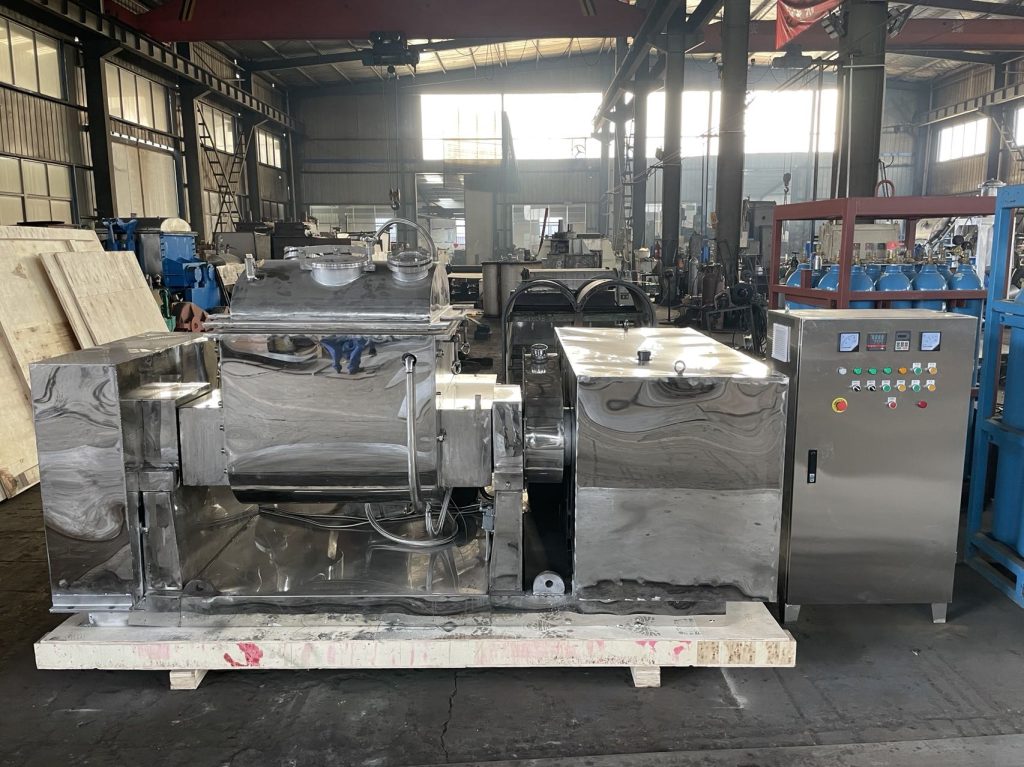 Stainless Steel Mixer Body and Project Control Cabinet
Visible Stainless Steel Surfaces Keep the Material Discussion Practical
The supplied machine view shows the stainless steel body and control-cabinet arrangement. It is useful for discussing the external finish, access points and the control location around a project layout.
Contact-material scope remains a separate decision. SUS304 is standard and SS316L can be discussed where material compatibility or the process calls for it.
Configuration Reference
Stainless Steel Sigma Mixer With PLC Discussion Points
| Product Class |
Stainless Steel Sigma Mixer with PLC |
| Control Planning |
Confirmed according to the material process and required batch sequence |
| Automation Scope |
PLC, HMI and VFD discussion according to project requirements |
| Contact Material |
SUS304 standard; SS316L can be discussed on request |
| Discharge Route |
Hydraulic tilting, screw or ball-valve discharge can be discussed by project |
| Process Options |
Heating, cooling, vacuum and related control functions can be discussed when required |
All specifications are for reference only. Final configuration is confirmed according to material behavior, process requirements and local electrical standards.
Machine View
A Complete Machine Reference Helps Define the Control Discussion
The complete machine reference supports a first discussion of mixer access, stainless steel exterior and cabinet location. The selected PLC scope remains tied to the agreed material process rather than to the visible arrangement alone.
Execution Evidence
Review the Agreed Machine Before the Balance Is Paid
For a project that moves from material discussion into production, HengMing can support a trial direction, SOP progress updates and milestone records. After production, the buyer receives the PDI report, mixer photos and separate videos for agreed functions before paying the final balance.

Material Trial
Discuss material behavior and the intended process before the configuration route is agreed.

Production Updates
Follow agreed milestones with production records and key-component checks.

PDI Review
Review PDI records, mixer photos and agreed function videos before final payment.
Component Visibility
Key Component Choices Stay Visible Before the Mixer Is Built
For a PLC project, drive and electrical choices should remain visible while the material route and control sequence are being defined. HengMing can identify standard component brands before production and discuss buyer-specified alternatives where required.
NSK
Stable Support for Repeated Kneading Cycles
WEG
Drive Power for Dense Material Loads
GUOMAO
Torque Planning for High-Viscosity Work
SCHNEIDER
&
CHINT
Clear Electrical Scope Before Build
SIEMENS
Optional Speed Adjustment When Required
Documents And Inspection Support
CE Documents and Third-Party Coordination
CE Certificate and CE Test Report are available for review. When project coordination requires it, HengMing can cooperate with a customer-appointed testing or inspection organization, including SGS and Bureau Veritas. This support does not mean every mixer has been inspected by those organizations.
 CE Certificate
 CE Test Report
Buyer FAQ
Questions Buyers Ask Before Choosing a Stainless Steel Sigma Mixer With PLC
How is the PLC scope discussed for a Sigma Mixer?
The buyer can share the material process, target batch, planned mixing sequence and the functions that need to be visible or coordinated. These inputs define the PLC discussion before a proposed machine is confirmed.
Does this page show one fixed PLC configuration?
No. The supplied image shows a project control cabinet, while the final PLC hardware, HMI and electrical scope are confirmed according to the agreed process requirements and local electrical standards.
Can heating, cooling or vacuum functions be discussed with PLC control?
Yes. Heating, cooling, vacuum and VFD control can be discussed when they relate to the agreed material process and operating sequence.
Can SS316L be discussed for the contact parts?
SUS304 is the standard contact material. SS316L can be discussed when material compatibility or the process requires it, with the final contact-material scope confirmed before production.
Which discharge route can be discussed for a PLC project?
Hydraulic tilting, screw discharge and ball-valve discharge can be discussed according to material behavior, process route and downstream handling requirements.
What will the buyer review before final payment?
After production, HengMing provides a PDI report, mixer photos and separate videos for agreed functions. The buyer reviews these records before paying the final balance.


